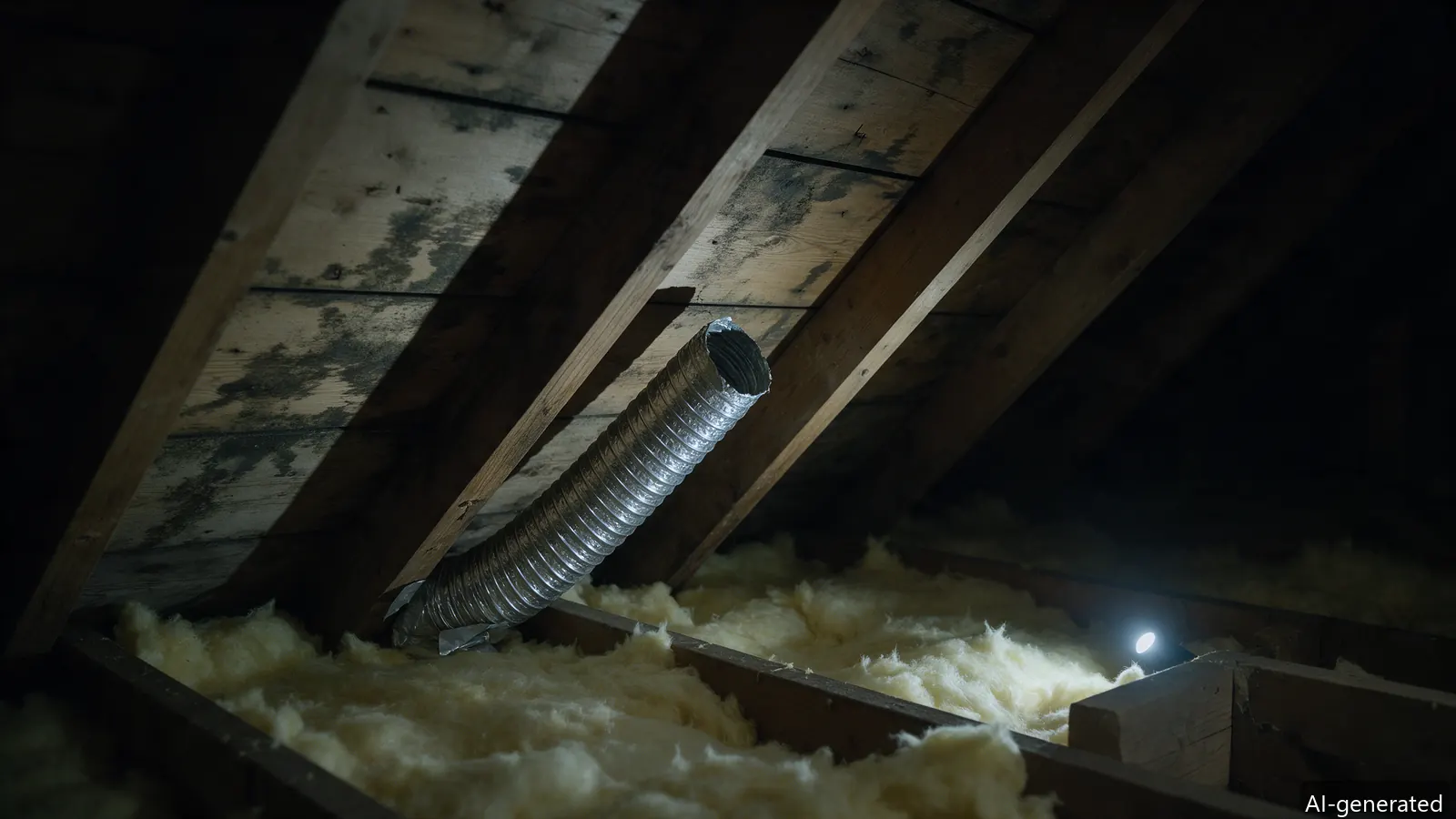
A bathroom fan ducted into the attic instead of through the roof. Warm humid air hits cold sheathing every shower, condenses, and colonies establish along the north-facing plywood. EPA’s moisture-control guidance is explicit: vent appliances that produce moisture to the outside.
Dark staining on sheathing is common in older attics and is not automatically active growth. An inspection distinguishes inert staining from live colonies (moisture readings, surface texture, sometimes lab confirmation — $303–$1,075, HomeAdvisor 2026).
Attic remediation runs $1,000–$4,000 (Angi 2026). Soda/media blasting of sheathing and framing is the standard removal; the fix that matters is re-ducting every fan to a roof or wall cap and confirming soffit-to-ridge airflow.
When you need documentation: real-estate transactions, medical concerns, insurance claims, or to locate hidden growth. If you can see or smell mold, testing the visible colony adds little — the money goes to fixing moisture and removing growth.
National ranges: visual inspection $250–$350; sampling with lab analysis $303–$1,075, averaging $689 (HomeAdvisor 2026). Each air or surface sample adds a lab fee. Written reports matter for insurance and real estate.
No. Fieldstone foundations wick moisture, but colonies only establish on wet organic surfaces. Controlled ventilation, dehumidification (target 30–50% RH per EPA) and grading that drains away from the house prevent most basement growth.
Hardware-store kits exist but rarely answer the real question: how much, where, and is it growing. Professional assessment combines moisture mapping, thermal imaging and, where useful, lab-identified samples.