Water damage and mold are the same problem at two dates. Handled inside the EPA's 48-hour window, a wet basement stays a drying job. Missed, it becomes a remediation project with containment — and a much bigger invoice.
EPA's Brief Guide to Mold, Moisture and Your Home is blunt: if wet or damp materials are dried within 24–48 hours after a leak or spill, in most cases mold will not grow. That window drives everything about emergency response — why extraction starts the same day, why air movers run overnight, why carpet pad that sat wet for a week gets discarded.
| Category | Source | Response |
|---|---|---|
| Category 1 — clean | Burst supply line, water heater, rain through a roof | Extract and dry; salvage porous materials when fast |
| Category 2 — grey | Washing machine, dishwasher, shower drain overflow | Extract, disinfect, remove wet porous materials |
| Category 3 — black | Sewage backup, rising floodwater, long-standing water | Porous materials removed; disinfection; PPE mandatory |
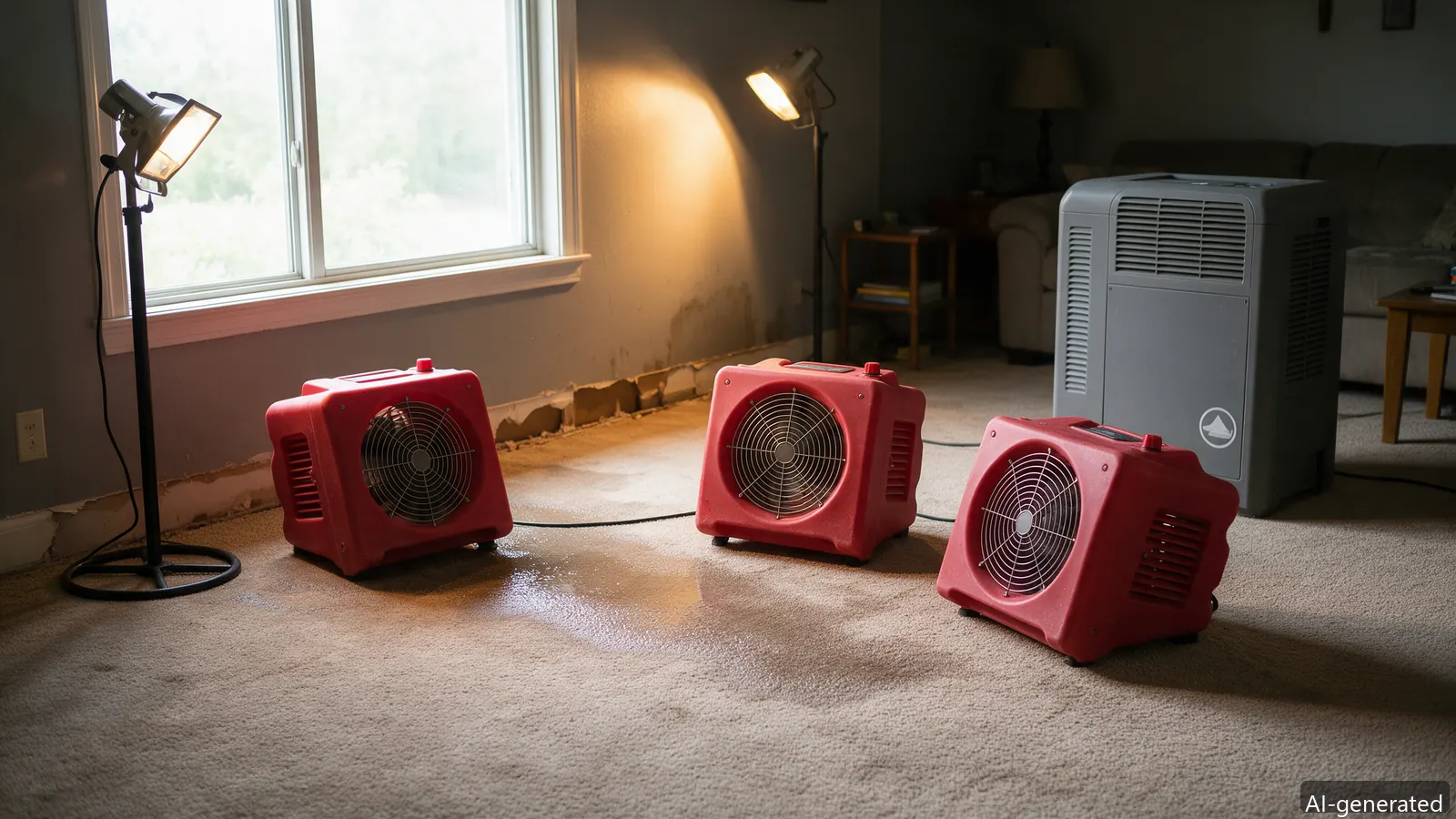
Surface-drying a wet wall is how hidden Condition 3 growth starts. Professional drying means: moisture meters to establish a dry standard before work begins, air movers to drive evaporation, dehumidifiers (refrigerant or LGR) to capture that vapor, and daily meter readings until cavity and subfloor readings hit dry targets. In Gettysburg's masonry-heavy housing, stone and block walls dry slowly and often need several extra days.
The local pattern: summer storm cells drop inches of rain onto saturated clay soil (June averages 4.7 inches, NOAA); fieldstone and block foundations seep for days; sump pumps fail during the exact hours they matter. Every one of these is a 48-hour countdown. The homes that avoid mold are the ones that extracted and dried immediately — or that had grading, gutters and a battery-backup sump already sorted.
2026 price data for Gettysburg job sizes.
What restoration and remediation cost →EPA rule: dry materials within 24–48 hours and in most cases mold will not grow. After 48–72 hours, porous materials that stayed wet (drywall, insulation, carpet pad) usually need removal, not drying.
Varies with category and scope. Related repairs overlap the mold price table: typical jobs $1,223–$3,757 (Angi/HomeAdvisor 2026). Get an on-site written scope before anyone starts demo.
If water reached wall cavities, subfloor or insulation: yes. Surface-drying a wet wall traps moisture behind it, which is exactly how hidden Condition 3 growth starts. Professionals use moisture meters to prove targets are met.
Sudden and accidental discharge is covered under most HO-3 policies; flood (surface water) requires separate NFIP coverage. Document everything: photos, moisture readings, professional scope.