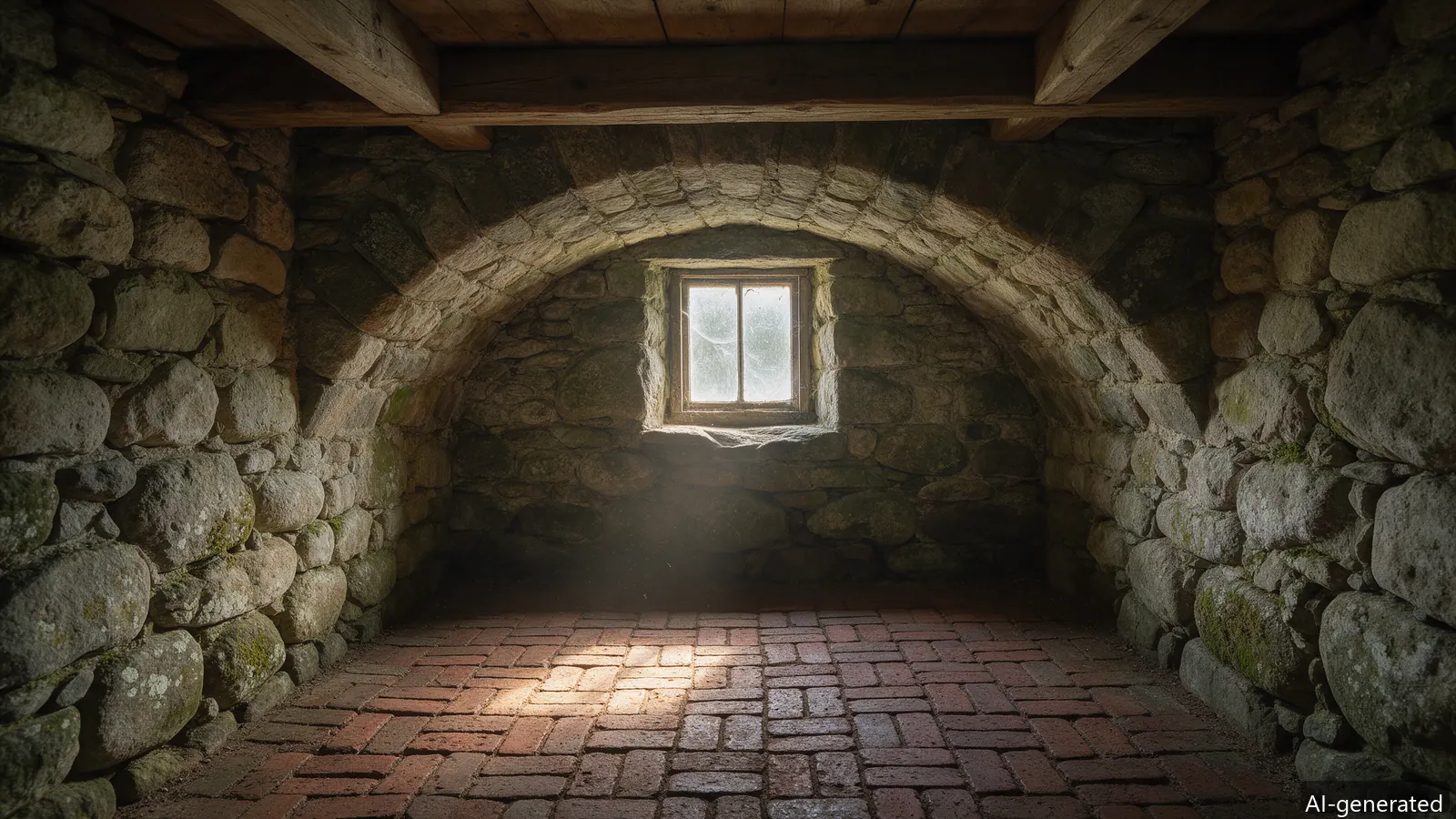
Adams County’s older homes — and the county’s housing is old (median owner-occupied build year 1978, PHFA 2023) — often sit on crawl spaces instead of full basements. The classic setup: bare soil, no vapor barrier, foundation vents left open in humid weather. Ground moisture evaporates into the cavity all summer; the cavity connects to the house through the floor. Joists, subfloor and insulation paper are all organic surfaces. That is the recipe in the county cost table’s most common line: crawl space, $500–$2,000 to remediate, cause “bare soil, no vapor barrier, humid summers.”
Remediation follows the S520 sequence — contain the cavity, remove contaminated insulation and debris, HEPA-clean framing, dry the space. Then close the moisture source: 6-mil+ polyethylene over the soil, seams taped and sealed at piers, vents sealed or conditioned per plan, and a dehumidifier holding 30–50% RH (EPA target) where the cavity is unconditioned. A $10–$50 hygrometer confirms it.
Crawl spaces change the containment math: a two-foot cavity can’t take a full negative-air setup the way a basement room can. Contractors work through a sealed access door, run the HEPA unit at the opening, bag debris out in stages, and treat insulation removal as the main exposure event — paper-faced batts over active growth come out whole and sealed, not in loose pieces. Cost stays in the county range ($500–$2,000, Angi 2026) unless framing is involved; upgrades to the vapor barrier and dehumidifier are the line items that decide whether the colony returns next summer.
Small isolated jobs finish in 1–2 days. Mid-size Level II/III projects with containment run 3–5 days. Whole-house work with structural drying can span 1–3 weeks. Post-remediation verification adds a day or two.
No. Fieldstone foundations wick moisture, but colonies only establish on wet organic surfaces. Controlled ventilation, dehumidification (target 30–50% RH per EPA) and grading that drains away from the house prevent most basement growth.
EPA target: keep relative humidity below 60%, ideally between 30 and 50%. A $10–$50 hygrometer from any hardware store shows where you stand.
Always to the outdoors through the roof or wall — never into the attic. Attic-vented fans are the most common attic-mold cause we document in Adams County housing.
In most cases yes from May through September: 44 inches of annual rain (NOAA 1991–2020, Eisenhower NHS station) plus fieldstone foundations keeps basement RH above 60% without one.
For small, contained jobs, usually yes. For Level III/IV containment with negative air machines and demo, contractors often recommend temporary relocation, especially with infants, elderly or immune-compromised occupants. Ask for the containment plan in writing.